
A damaged area does not tell the whole story of a siding project. Before deciding between a partial repair and a broader replacement, ask for an assessment of the condition, the material and the scope needed to address your concerns.
It is reasonable to arrive with a preference. You may want to keep as much of the existing exterior as possible, or you may already be considering a different appearance. Share that goal while remaining open to the findings of an on-site review.
Describe the concern without guessing the cause
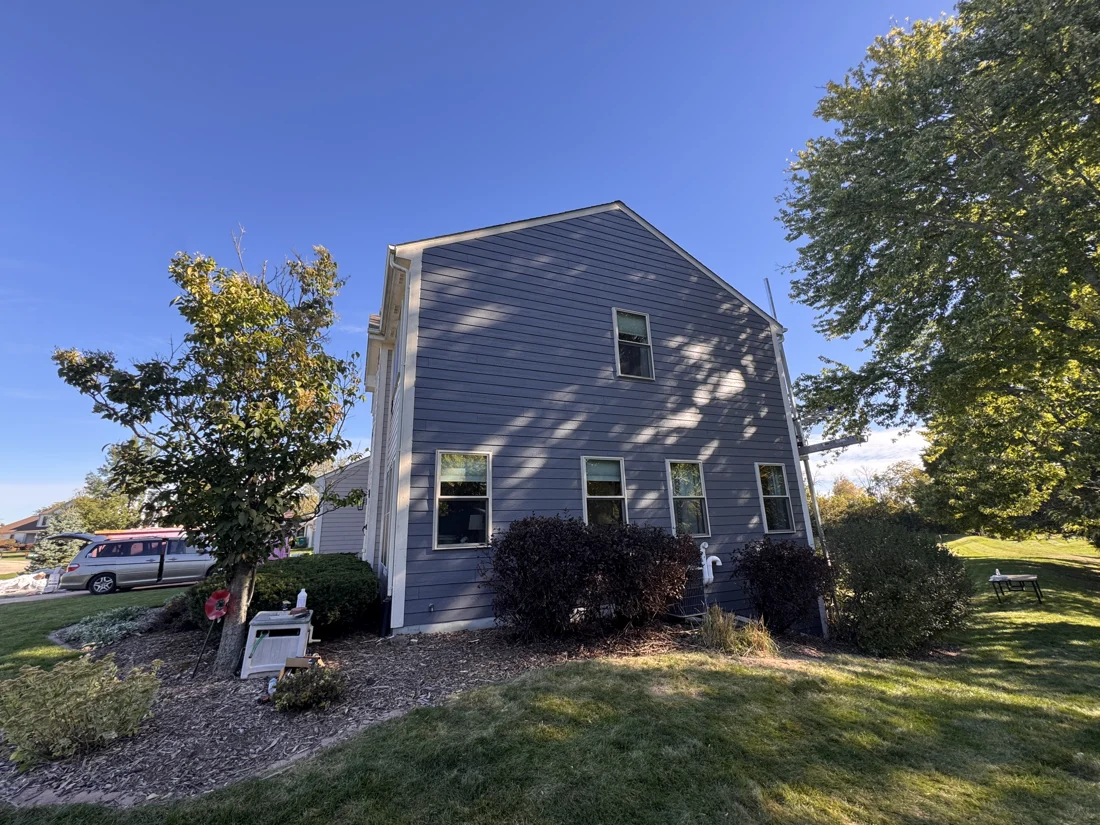
Record what you can see from a safe position: the location, the approximate extent and when you first noticed it. Explain whether anything has changed. If you have photographs from an earlier date, keep them with the current pictures.
Give the contractor a view of the whole elevation as well as the detail. Mention any related observations, such as an issue that appears after rain. Let the assessment determine what those observations mean rather than assuming the visible mark identifies the full problem.
Identify what is already installed
Look for the original proposal, product information and records of later repairs or painting. Ask whether the existing material and finish can be identified and what options are available for matching or transitioning to them.
Matching is a design conversation as well as a product question. Ask to see how a proposed solution would relate to the surrounding surface. If an exact match is not available, discuss the appearance of a defined section or elevation before agreeing to the scope.
Compare complete scopes
Ask what each option addresses, what it leaves in place and which conditions remain uncertain. Request clear boundaries for removal, replacement and finishing. For a larger proposal, ask why the additional scope is recommended and how it relates to your original concern.
Discuss what happens if removal reveals something that could not be assessed beforehand. Agree on documentation, pricing and approval of additional work. Comparing a clearly limited repair with a fully described replacement is more useful than comparing two unexplained totals.
Check project fit before making plans
Tremor’s established focus is complete residential and commercial new construction and remodel projects. Partial jobs and repair requests are reviewed individually for fit; submitting a request does not mean that every small repair can be accepted.
In your estimate request, include the property city, a brief description of the issue, and whether you are considering a larger exterior project. Explain your priorities: retaining existing material, changing the appearance, or understanding the available options. That gives the conversation a clear starting point without committing you to a diagnosis.
Bring your project into focus.
Tremor is based in Fall River and Kenosha, with work across Wisconsin. Share your location and the exterior work you have in mind.
Start a conversation