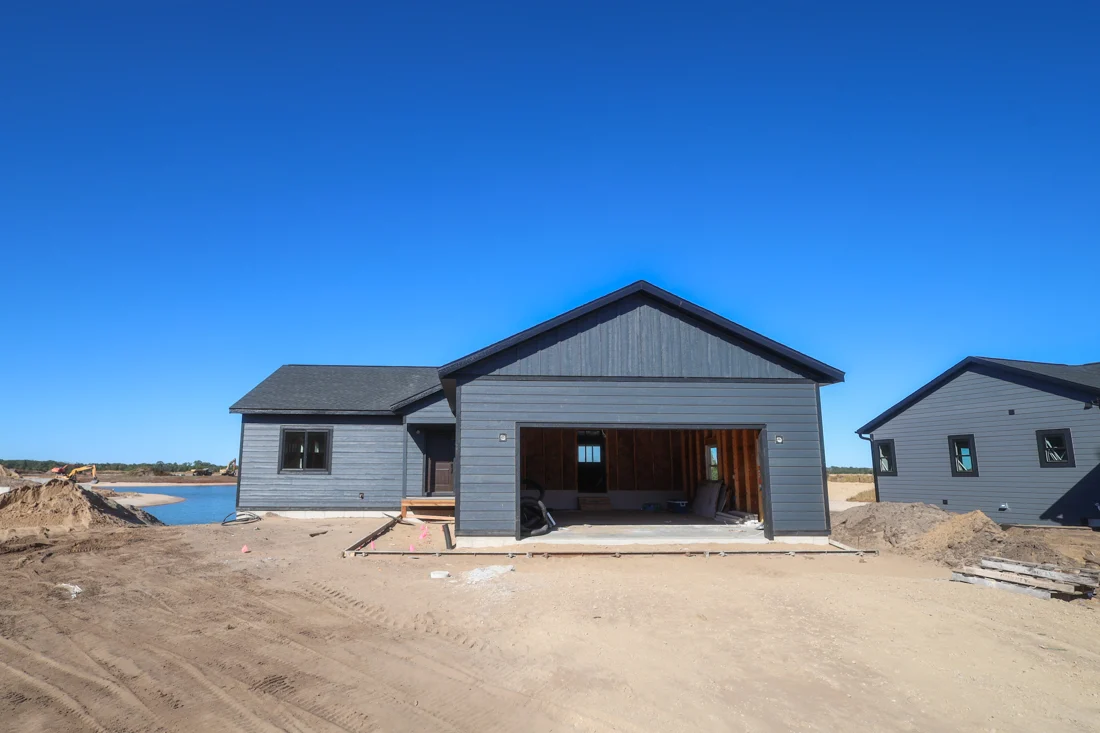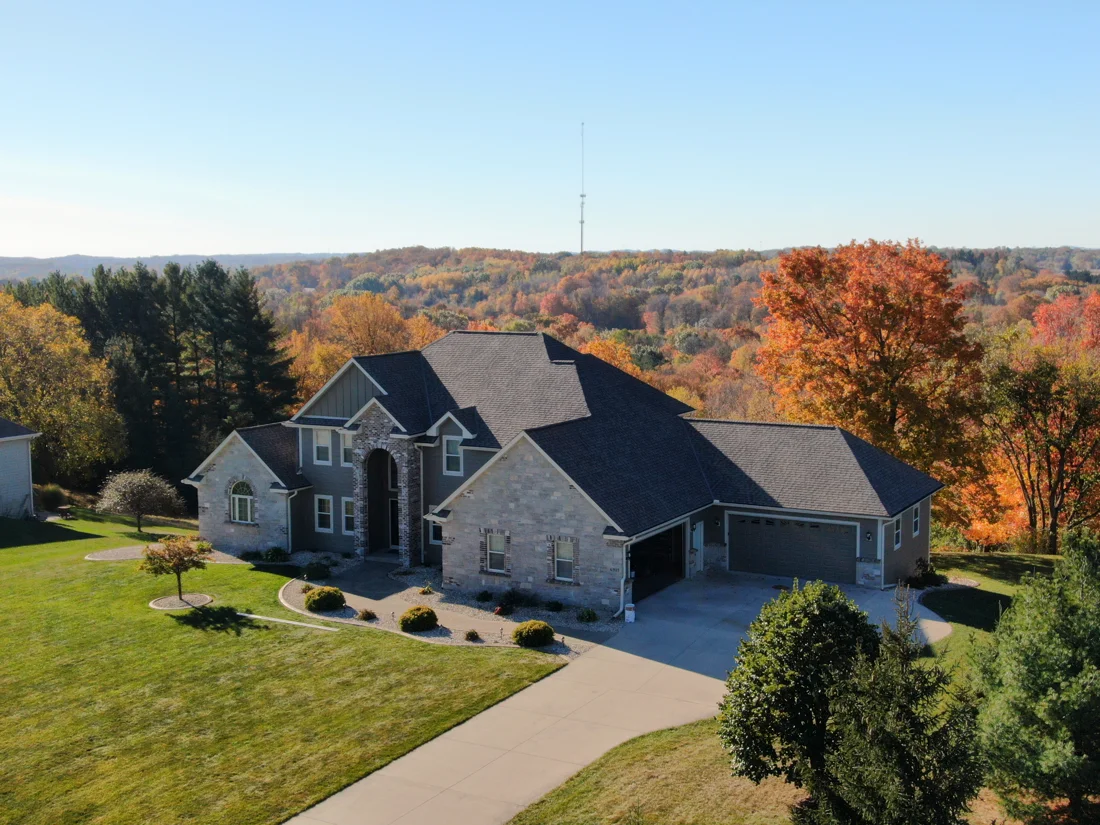

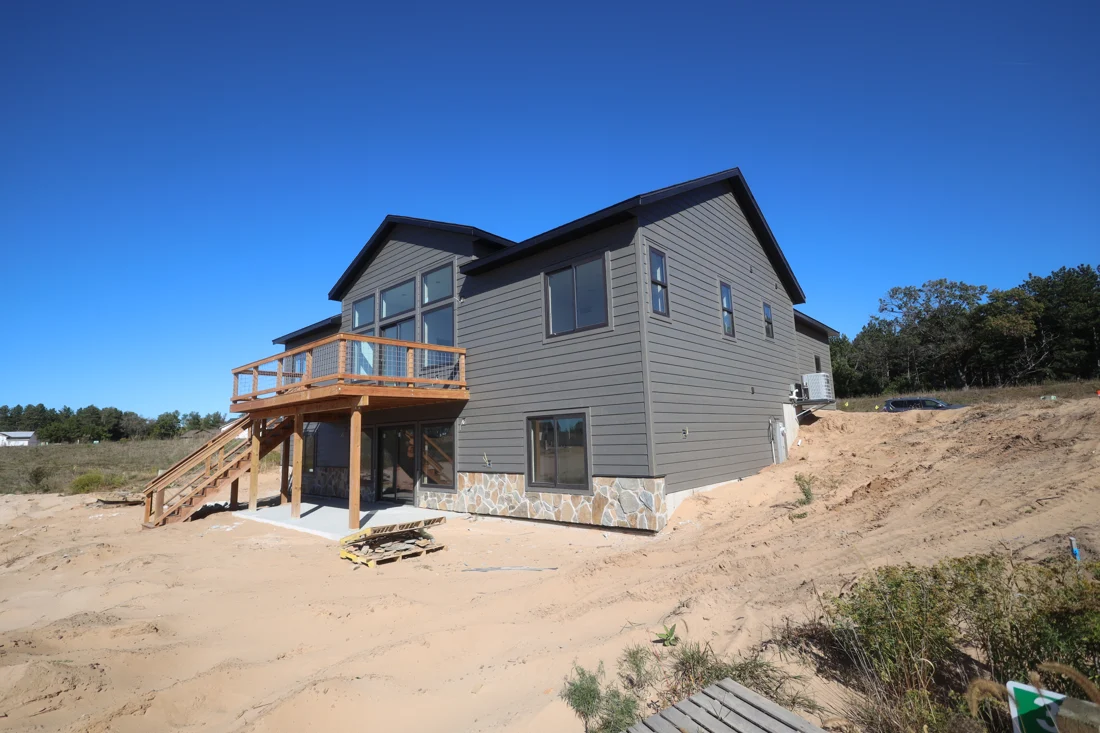
Lap siding and board-and-batten siding create different rhythms across a building. One emphasizes repeated horizontal courses; the other establishes a vertical pattern. Both can feel restrained or expressive depending on how much of the exterior they cover, how they meet the trim and how they relate to the windows.
The strongest choice begins with your house, not a style label. Before choosing a farmhouse reference or a contemporary palette, look at the shape of the building. Identify the large wall areas, smaller additions, gables and entrances. Those existing relationships provide a useful starting point for an exterior composition.
Read the house as a whole
Take a straight-on photograph of each elevation from a safe position. On a copy, mark the rooflines and window groupings. Notice where the building already changes depth or direction. Those breaks can become natural places to consider a different siding treatment without dividing an uninterrupted wall arbitrarily.
A long, low elevation may look calm with a consistent horizontal rhythm. A tall entry or gable may offer a place to explore vertical lines. These are design possibilities, not rules. Test the idea on your own photograph before deciding that the treatment in a reference image belongs on every part of your home.
Use contrast with a reason
Combining profiles works best when the change explains something about the building. An entry volume, upper story or distinct addition may warrant emphasis. Changing profiles on several small patches can make the exterior harder to read, even if each individual material is attractive.
Try a version with one primary profile and a second version with a single accent area. Compare both from across the street. If the accent does not make the entry, proportions or overall composition clearer, the quieter option may be stronger. More material types do not automatically create more architectural interest.
Review the transitions before ordering
Ask how the proposed profiles will meet at corners, horizontal divisions and openings. Have the contractor identify the applicable product details and any visible transition components. A clean concept drawing should be developed into an installation approach appropriate to the selected products.
LP’s SmartSide product catalog includes lap siding and products used for board-and-batten appearances. Confirm the specific product, texture and finish available for your project rather than treating every photograph as an interchangeable specification.
Bring a focused design brief
Choose two or three reference images and label what you like: broad horizontal lines, a quiet gable or a clearly framed entrance. Include one image you dislike and explain why. That contrast often communicates your preference more precisely than a broad request for a modern exterior.
Tremor can discuss LP SmartSide installation as part of your siding project. Start with your project location and scope, then share the profile direction you are exploring. Leave room for the building’s proportions and installation requirements to shape the final choice. A coherent exterior should feel considered from the driveway and equally deliberate when you stand beside it.
Bring your project into focus.
Tremor is based in Fall River and Kenosha, with work across Wisconsin. Share your location and the exterior work you have in mind.
Start a conversation